The most common tummy complaint I hear from parents of toddlers? Constipation. And while it has lots of possible causes, one pattern I see again and again is a toddler who needs a little more fibre!
The reassuring part is that this is usually very fixable, and simple to do with food. You don't need special products or a complicated routine. Just a few small, everyday habits that bring fibre-rich ingredients into your toddler's day.

Why fibre matters for toddlers
Fibre has many important jobs in a toddler's body, but there are two key areas worth knowing about. First, it keeps digestion regular, adding bulk to stools and helps the gut move things along, which makes for more comfortable, predictable nappy changes and potty trips. Second, it feeds the beneficial bacteria living in your toddler's large intestine, also known as the gut microbiome.
Fibre is the preferred 'food' of gut bugs, and a well-nourished gut microbiome impacts so many areas of your toddler's health. It supports immunity and general health, and there's growing evidence that the habits we establish early on can have a long-lasting effect into adult life. In fact the first 3-5 years of a child's life has been shown to be the time when they develop a community of gut bacteria that are likely to come with them for life. Whilst the research here is still developing, getting a variety of plant foods into your toddler's diet is one of the best things you can do.
There are two main types of fibre and it's worth knowing the difference. Soluble fibre, found in oats, beans, lentils, and fruit, dissolves in water and forms a gel in the gut, slowing digestion and softening stools. Insoluble fibre, found in the skins of fruit and veg, wholegrains, and nuts, adds bulk and helps things move through more quickly. Toddlers benefit from both, and the good news is that most fibre-rich foods contain a mix of the two.
Toddlers are particularly prone to falling short of fibre because eating patterns can change, especially into the second year of life when they may be more reluctant with vegetables, lean towards beige foods or find mixed family dishes more challenging. The good news is that small tweaks and additions to their diet can make all the difference.

How much fibre does a toddler need?
Firstly it's important to remember our tots need much less fibre than we do, and too much fibre can also impact children's tummies. For children aged 2 to 5 years, the British Nutrition Foundation recommends around 15g of fibre per day. For toddlers under two, we build towards that gradually. Compare that to the adult target of 30g, and you can see it's entirely achievable through ordinary meals.
Two things I always tell parents when it comes to fibre is to build up gradually, and always offer plenty of fluids alongside. Jumping straight to a very high-fibre diet can cause bloating and tummy discomfort. Go gently, and your child's gut should adjust without complaint.

Everyday fibre-friendly foods and meals
Fibre comes from foods most families already eat. Here's where to find it and how to build it into real mealtimes:
Beans, lentils, and pulses. These are some of the most useful fibre sources in a toddler's diet. They're filling, protein-rich, and full of key nutrients toddlers benefit from. Kidney beans in a chilli, chickpeas in a curry, red lentils folded into a tomato sauce: all are soft textures toddlers can manage well, and the flavours tend to go down better than parents expect. Our Chilli Con Carne is made with British beef mince and kidney beans in a delicately spiced tomato sauce, served with rice. It's a meal that packs in those kidney beans in a form toddlers genuinely enjoy. Mild Chicken Korma pairs free-range chicken with chickpeas in a thick, creamy korma sauce: another combination with visible, recognisable plant ingredients at its heart.
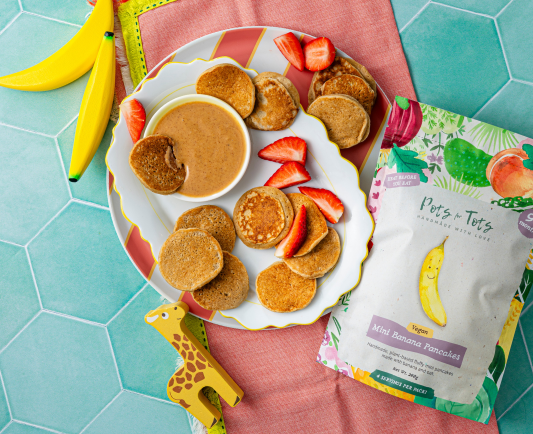
Wholegrains and oats. Wholegrain bread, pasta, or rice offers more fibre (and more micronutrients) than their white equivalents. Porridge at breakfast is one of the simplest ways to add oats into the day. If your toddler is firmly attached to white bread or pasta, try mixing half and half to begin with or choosing a 50:50 bread. Most little ones adapt quickly without noticing. For a snack that earns its place, our Mini Banana Pancakes are plant-based and made with oat and banana, a combination that works equally well at breakfast or in the afternoon.
Vegetables, especially with the skins on. Sweet potato, courgette, broccoli, peas, and carrots all contribute meaningfully to a toddler's daily fibre. Where you can, leave the skins on: much of the fibre in potatoes, courgettes, and apples sits right there. Our Sweet Potato Curry brings together sweet potato and vegetables in a gently spiced sauce with long-grain rice. It's a warming option for a busy evening when you want something balanced and ready in minutes.
Fruit. Pears, apples, kiwi, berries, and ocassionaly dried fruit like dried apricots are all worth offering regularly. Whole fruit matters here because it's the intact fibre that makes the difference, not fruit juice. Our Fruity Lamb Tagine combines British lamb mince with apricots and bulgur wheat, a different grain that toddlers often take to well. It's a gentle introduction to a wider range of flavours and textures, and a nice change from the usual rice or pasta base.
Gentle ways to add more fibre (and when to check with a professional)
You don't need to overhaul everything at once. Pick one or two of these to start:
- Swap one grain. Offer porridge at breakfast once or twice a week, or try wholegrain toast instead of their usual white.
- Leave the skins on. Courgette, sweet potato, apple: most toddlers won't notice, particularly when the skin is soft and the flavour is familiar.
- Add a spoonful of pulses. Rinsed tinned chickpeas or red lentils disappear into tomato sauces without changing the taste much at all. A tablespoon is plenty to start.
- Offer whole fruit at snack time. A small pear, a few blueberries, sliced kiwi: all are simple, portable, and genuinely useful.
Fluids matter alongside all of this. Fibre needs water to do its job properly, so make sure your toddler is drinking water or milk throughout the day, especially if you're adding more fibre-rich foods.
A word on constipation. If your toddler is passing hard stools, straining, or going infrequently and seeming uncomfortable, it can be worth looking at both fibre and fluids first, but if things don't resolve, or your little one is in pain, has blood in the stool, or isn't eating well, please speak to your GP or health visitor. You're never wasting anyone's time, and constipation can often require the support of laxatives, even for a short period.
Remember, feeding toddlers well doesn't have to be perfect. A few beans in the curry, oats at breakfast, a handful of berries - it all genuinely adds up, and you're probably already doing more than you realise.
If you'd like a bit of help making sure the meals are sorted on busy evenings, have a look at our Build Your Box options. Balanced, real-food meals developed with our Children's Dietitian, ready in minutes, and made to nourish your little one properly.